First Years … First Memories

Lea Wait, here. I’ve been working on the third book in my Mainely Needlepoint series. If you haven’t read the first one, Twisted Threads, published earlier this month: Angie Curtis, the main character, is from Haven Harbor, Maine. Her mother disappeared when she was ten years old. Angie left Maine when she was eighteen, but now she’s back, to find her mother’s killer and start a new life.

Lea at age 2 1/2

Lea at age 2 1/2

As Angie visits places she hasn’t seen since her childhood, and meets people she knew as a little girl, her memories haunt her. Good memories and not-so-good memories. When I’m writing from her point of view, memories are on my mind.

So when I saw an article in This Week magazine called “Why We Forget Our First Years” I read it.

Some of us have memories of our early childhoods. But this article said that most adults do not remember their first three or four years, and have very few memories of what happened before they were about 7. Would returning to a home where they’d lived as a child or meeting a long-lost relative bring those memories back? Not according to this author. He wrote that until the 1980s, that was what was believed. But a 1987 study showed that many 2 1/-2 year-old children could describe events that had taken place 6 months before. Even many children between the ages of 4 and 10 could recall incidents that happened when they were only two years old. But interviewed again two years later, two-thirds of these same children had forgotten those incidents. Called “childhood amnesia,” the study showed that most of our childhood is forgotten. Gone. The memories we do keep are sometimes connected to emotions … sometimes totally random.

Does what happened in those early years matter, if we can’t remember them? Psychologists say yes, even if we can’t remember the details of our early life, those events imprinted on our emotions, so in later years we believe circuses are fun (or scary;) dogs are good; cats scratch. Grownups can be trusted. Or not.

I have three memories from before I was 2 1/2. I remember being outdoors, bending down to look through a cellar window, and seeing a bunny. I remember climbing a lot of stairs and finding a room at the top of the stairs on the right that was filled with cartons … and my doll’s swing, on top of the boxes, in a spot of sunlight by the far window. I remember holding my grandmother’s hand and walking through a tunnel of white snow, away from my house.

When my mother was still alive I shared those memories with her, and she agreed they were real. The bunny lived in the basement of the house next door to where we lived until I was 2 1/2. The room I remembered (and which became my own room years later) was on the third floor of the house we moved into a month before my little sister was born. And my grandmother came from Boston to New Jersey and took me back to Boston with her so my mother could unpack and rest before her next baby was born. My grandmother and I left New Jersey right after a heavy snowfall and took the train to New York, and then to Boston. I have no recollection of that train ride.

I have other memories, too … many of them of my grandparents’ house, and people and things there. They left that house to move in with us when I was nine, so the memories were of events before then, but I can’t date them.

When I’m writing Angie Curtis’ memories, I’m assuming she can remember repeated events, like Fourth of July fireworks and Christmas. And she can remember emotional events, like special days she spent with her mother.

But, of course, I’m writing fiction.

How far back do your memories go? And how often do you think of them? I’m not a psychologist, but I suspect those are important questions. And, as a writer, even if I can’t answer the questions for myself … I can answer them for my characters.

Posted in Lea's Posts, Uncategorized | Tagged , , , , | 8 Comments

Dig Dig Dig

snow pic 1

Hello again from Sarah Graves, writing to you from the farthest northern reaches of the Arctic Circle…no, wait, I’m still in Eastport, Maine. It only feels like the Arctic north, partly due to the 47 inches of snow we got last week and the 15 more inches that will start any minute, so sayeth the weather guessers. We had been coasting along on a mild December and January, one in which we took long walks around the island and wore only three layers — silk long underwear, sweatshirt, really big sweatshirt — for them. Now that’s the outfit you wear to bed around here, and a wool hat to go with it. The wind has gone from briskly friendly to frankly murderous, and when you go outside at night you can hear the elements murmuring among themselves, plotting your icy demise.snow dog

Not everyone thinks it’s too cold to play outdoors. Evelyn thinks the word ‘snow’ comes naturally attached to the phrase, ‘dashing through the.’ Being a pet, though, means having servants to pry the ice from between your toes and give you a brisk rub-a-dub with a thick, warm towel after your wintry fun. Some dogs would disdain all this but Evelyn knows creature comforts were made for her . After all, it’s creature comforts, and she is one, right? Meanwhile the ice between my toes seems destined to remain there until spring; the old cast iron radiators in this house work great but when it’s this cold what I really want is radiant floor heating. I want it to radiate so hard that it glows in the dark.

snow pic 4Our trusty garden shed is half buried; I’m expecting it will be three-quarters covered or more by tomorrow. To clear our driveway we have a Plow Guy; the sight of the whirling yellow roof-beacon on his truck is among the pleasures of winter. Afterwards, though, there’s still plenty of unplowed area that, like everyone else, we just get out there and shovel: digging out the car, clearing off both porches, and opening up in front of the shed so the doors can swing open. Otherwise we’d be having to hoard our trash until spring, since at this time of year you don’t dare leave the trash cans out. Hungry raccoons and skunks can open them, even if they’re bungie-corded, faster than I’m able to, and I expect the sea gulls to get the hang of it any day, now. Probably they’ll learn to cooperate to do it, and if they ever develop thumbs we’re doomed (and not just about the trash cans).

DSCN0518Here’s what it looks like outside my window. The house in the foreground had British officers living in it during the War of 1812, when Eastport was occupied after the taking of Fort Sullivan and its citizens were made to sign loyalty oaths. (That’s one reason why the 4th of July is a big deal in Eastport.)  After that it was continuously inhabited, most recently by the Varney sisters who were born and grew up there and lived there until they were in their nineties, until only a few years ago. There was a very old  decorative iron fence set into the very old granite slabs marking the front edge of the front yard; the Varney sisters, I imagine, enjoyed the shade of the stately elms that lined Key Street then, arching over it to form a tunnel that carriage-horses clip-clopped through. Now the house stands empty, awaiting a promised rehabilitation. I think the new owners should hurry up; if they let it sit too long with all its history that place is sure to develop ghosts.

DSCN0446I don’t know about you, but all this indoor-ness is making me feel a little crazy. Not that there isn’t plenty to do (she said, weeping quietly) but I thrive on much more outdoor time than I’ve been getting, even with all the snow shoveling. But…idea! (Picture a light bulb going on suddenly over my head.) I have a pair of cross country skis, and the boots might even fit me, and… And very soon, now, Key Street will be snow-covered, not yet plowed or sanded, perfect for… Well, that’s it. To combat my bout of cabin fever I’m going to make chicken tortillas, and bake some oatmeal raisin cookies. That way there’ll be plenty to eat even if I do manage to suffer some small cross-country-ski kerfluffle.  Not that I think there’ll be one. After all, it’s just me with my feet strapped onto long, slippery-skinny sticks, sliding along not quite well-controlled on a Very Hard Surface…really, what could go wrong?

Posted in Sarah's Posts | Tagged , , , , , , | 6 Comments

So, What exactly is Value, Good Sir?

Kate and I were talking about some of the ways I’ve taken a small rural library in a town that’s closer to hardscrabble than most and made it busy and well-respected throughout the state. “You should write more about that stuff,” she said. So, at the risk of beating a deceased equine past viable function, I’ll share more history of how I came to be known as the Radar O’Reily of the Maine library world.

Let’s hop in the wayback machine and head to the mid to late 1950s. Kate was six or seven and I was a year older. Our father would tell us to get into the truck or sit on the tailgate (things like child safety were a lot looser in those days). We’d head up the road toward Appleton and whenever we spotted a returnable in the ditch, one of us would alert Dad and he’d stop while we retrieved it. When ‘ditch mining’ was really good (usually right after the snow melted), we’d end up with a decent haul and we’d stop at the little store in Appleton where Dad would buy beer and we’d split the proceeds from our finds. When we got a little older and had our own bikes, we’d ride off, hunting on our own.

That activity, which netted us real cash money, left an indelible mark on my personality. When our daughters Sara and Lisa were about the same age, we started our own ditch mining routine, generally after the snow melt. Over a period of several years, we found enough returnables so the money, along with any rebate checks from stuff we sent in after buying products, went into mutual funds for the girls. By the time Sara was ready for college, her share, coupled with what we could afford to spend, meant that she was able to graduate with no college debt. We couldn’t do quite as well for Lisa (she went to graduate school as well as getting her B.A.), but within a year of her getting her first masters degree, she, too was debt free.

After the kids were in high school, I continued to stop and pick up returnables whenever I wasn’t in a hurry. A couple times I found things that were a heck of a lot more valuable than a five cent deposit. Once in Coopers Mills, I found a V8 can with an entry form on the reverse side of the label. I filled it out, sent it in and a month later, got a check for $1,000. Several years later, while picking cans from the roadside at Sennebec Hill Farm, I spotted a bag with a plastic needle inside. It was attached to a note that said: “Congratulations, you have found a needle placed here by a representative of Birds and Blooms Magazine. We have placed 50 of them around the U.S. to see how many are picked up by people who care about the appearance of their community. Mail it in and you will be rewarded.” This time, I received a check for $50.00. In essence, the whole look for and grab returnables business was, for me, classic Pavlovian conditioning. Heck, I still stop every now and then and grab a few if time permits. Until the redemption center here in Hartland closed, I bought their Coke caps and the money we would have gotten for our returnables went to help support the town swimming pool.

Aye, Matey, Them Was the Days. How i miss a bit of hack 'n' slash after a hearty breakfast.

Aye, Matey, Them Was the Days. How i miss a bit of hack ‘n’ slash after a hearty breakfast.

When I discovered computers (the first was a Commodore 64), the thing that hooked me and made me want to get under the hood, were role playing games-RPGs. Between 1982 and 2005, I owned and probably played every RPG that came out. I loved the ability to get so immersed in a game that I forgot where I was, who I was and what time it was. I called in sick more often to waste 12 hours getting into a new game than because I was really ill. Some games stood out like the Might and Magic series, The Bards Tale, Ultima Underworld 1&2, The Elder Scrolls series and the original Diablo (I played that one all the way through 9 times) to mention a few. Two aspects of the genre totally hooked me. I liked fighting monsters, but I liked checking treasure chests after I vanquished them a lot more. I never knew whether they were going to contain an Awesome Ring of Dude Invincibility or the ubiquitous Fizbin of Misfortune. It was the moment of AHA when the lid swung back that was so addictive.

Ice worms ahead. Better get out your crossbow.

Ice worms ahead. Better get out your crossbow.

When I was running the adult education program at the old state hospital in Augusta, I met the late Walter Taranko. He hated to see resources go to waste, so whenever a school or library got rid of books, he’d find a way to get them to Augusta and store them in the warehouse used by the Maine State Library. He gave me carte blanche to roam through his treasures and take anything I thought might be useful as a library for patients in our education program. The result was twofold. First, our students had a new and oft-used resource and second, I found that I liked the concept of keeping stuff out of the trash stream.

When I took over as the librarian there, I soon realized that there was a national network online that was dedicated to sharing unwanted issues of medical and psychiatric journals in return for postage reimbursement. I was able to convince the administration that getting in on this was a great and very cost-effective way to expand our professional journal collection. In a matter of a couple years, we had the best such collection north of Boston. Twice I took my truck to libraries that were closing or downsizing and returned with full loads. One came from MacLean Hospital in Belmont, MA., the other culminated in my rescue of the mental retardation periodicals at Pineland that were headed for the trash until I raised hell and finally got the higher-ups in the Dept. of Mental Health to let me assimilate them into my holdings. This obsession paid off nicely because it didn’t take long for big medical facilities all over the US and Canada to recognize that I was happy to lend and borrow on a reciprocal basis through the National Library of Medicine’s interlibrary lending software known as DOCLINE. They got access to rare psychiatric journals and our medical staff got access to cutting edge medical journal articles quickly and at no cost.

I discovered a new variation of real world Might & Magic when I became the director at the Boothbay Harbor Memorial Library after leaving AMHI. The Friends of the Boothbay Harbor Memorial Library ran a used bookstore in the building next to the library and generated a really amazing amount of money each year. Books were frequently dropped off at the library when the book store was closed and I got in the habit of triaging them and pulling anything I thought was worth adding to the collection. In addition, I pulled ones in better shape than the copies in circulation. We ended up replacing about 200 of ours with better copies each year. There were other, unexpected bonuses that came with triaging books. I’d find unused postcards from all over the world as well as money that had been used as bookmarks.

As time went on, I started contacting some of the people who brought in books, thanking them personally and telling them a bit about how their donated stuff was being used. I ended up referring to this as ‘selling the donation’ and people really liked it. Most of the time when we donate something, the best we get is an acknowledgment and/or a thank you, but we don’t really know what effect the item or the money really has. I discovered that people really get excited when they find out you added a book they gave you because you knew a specific patron who would be excited to read it, or that three of the Janet Evanovich hardcovers they dropped off replaced ones that were falling apart because they were so popular. I frequently highlighted specific donations we got in my weekly library column in the Boothbay Register. These weekly snapshots of what was going on at the library were quite popular and resulted in an increase in donations as well as bringing in new patrons. In the process, I discovered another interesting fact. People new to an area learn a lot about it from reading what goes into the local news. I had many people tell me that they felt more comfortable coming to the library and getting a card because of what they read in my column.

Sorry, my friends, but the 4 pm coffee break has been cancelled.

Sorry, my friends, but the 4 pm coffee break has been cancelled.

When I moved on to the Maine State Library in 2002, awareness of my interest in maximizing the value and lifespan of unwanted stuff had grown via things I had shared on the Maine Library Listserv MELIBS-L. Even though I wasn’t part of a public library with a direct venue to use unwanted stuff, I still got calls and emails asking if I wanted such and such. Some items, like 30 year old encyclopedias, were easy to decline. Others, like psychiatric reference books and signed copies of books by Maine authors, were impossible to refuse and I started selling a few items on Half.com. I was shocked at how much some of them sold for.

I was on the board of trustees at the Hartland Public Library when Kerry Baldwin, an energetic librarian in her first professional position decided to move home to Colorado. Everyone on the board had the same initial thought. We hired someone who could turn the library around, she’s been doing a great job, so what do we do now? I went home and started thinking about making one more career change. It was a pretty big pay cut, but instead of being on the road by 7 am every morning and driving 5-700 miles a week, I’d go to work at ten and drive three blocks. Another huge plus was the freedom of being my own boss as a one person operation.

One of my first projects was weeding aggressively. There was a lot of stuff on the shelves that hadn’t been checked out for 15 years or more. Because Kerry had asked me to help her get the collection into the statewide system, seeing which books weren’t unique to Hartland was easy. Because of my work at the Maine State Library I knew that with Hartland participating in the statewide van delivery, we could justify getting rid of a lot more items because we still had access to them in a short time frame through interlibrary loan. Once the shelves started looking uncrowded, people began borrowing more, in part because the library looked different, but also because they no longer needed a crowbar to get a book off the shelf.

It was around this time that I discovered www.bookmooch.com, an online book swapping site that had members all over the world. I listed several hundred of the weeded books and in short order, was sending them to people as eager to get them as I was to get rid of them. The concept was simple. Scan in the ISBN or type in the title, add notes regarding the condition and save the listing. You got 1/10th of a point for each book listed, a point for each one sent in the US and three points for any sent to another country. In the eight years since I started participating, I have given or received 7230 books. Almost every one I’ve received has been added to the library collection. A year or so later, I discovered another swapping site called www.paperbackswap.com This one is only for US residents, but also allows members to swap for audio books on CD. Despite the title, both hardcover and paperback books are listed. It also allows members to create special searches and save them for regular use. I have four that I run almost every day: Orca and Flux look for YA books published by these two firms, an audio one searches for unabridged audios on CD and Teen searches for young adult books that have been published since 2010. Once again, I’ve swapped several thousand books and audio books here, most of which have been added to the collection. In the process, I’ve made friends with a dozen or so swappers who have been giving me deals and extras because they know these freebies will go into our collection, and by proxy into the statewide system so almost anyone in the state can enjoy them.

It was through PaperbackSwap that I first started getting audio books in MP3 format on CD. We now have arguably the largest collection of them in Maine. If you’re unfamiliar with them, they’re audio books on disc that use the same encoding that Itunes uses for music. They have two advantages. One, they can easily be ripped to an iPod or similar device so you can listen to them anywhere and, two, they have a very large capacity, so most of them hold an entire book on one or two discs. There is one small downside, though. Because almost no libraries have them in their collection at this time, I end up having to create a new bibliographic record for most of them. It’s a time consuming process, but is good payback for all the records others have created that I can grab and use in less than a minute.

Last year, PaperbackSwap expanded and opened up two sister sites, SwapaCD (http://www.swapacd.com) and SwapaDVD (http://www.swapadvd.com/home.php). Both charge a nominal handling fee for each trade. I’ve used both to get and give CDs and DVDs. In fact, we have added close to a dozen full seasons of obscure TV series to the library collection this way.

All of these experiences culminated in my realizing that for a one person library, there had to be a better way to turn donations and weeded items into something better. I tried a book sale in the first year I was here, but we barely broke the $100 level and it tied up several people for almost a full day. The catalyst for getting serious with selling online was when a nearby library posted all their weeded items as freebies on Melibs-L. After a week, the list was re-posted and when I looked at it, the number of items hadn’t decreased much. I called my friend who was the assistant there and said that I’d be happy to take everything off his hands. It took two trips, but when I started listing items (I was selling only on Half.com at the time), I was shocked at the prices some items were fetching. Old reference books and certain ten year old textbooks sold for almost as much individually as we’d made in that book sale.

After a couple months, I realized that Half.com had an annoying flaw. Another seller could file a complaint about one of my items and Half.com would remove it before I had a chance to determine whether it was a valid beef. That got so annoying I pulled all my listings and started selling on Amazon. In addition to not having to deal with the anonymous complaint issue, Amazon allowed me to list items that were too old to have an ISBN.

Two things came out of this new way of generating revenue for the library. I ‘sold’ this new way of using donations through a weekly newspaper column as well as through individual conversations and patrons came on board in droves. Secondly, I got better at guessing in advance which items would be worth listing. One day, I was in one of the Goodwill thrift stores and realized I knew enough to try buying stuff to sell online to make a few bucks on the side for myself. Right from the git-go, my average was above 70% (7 of every ten items was worth listing on Amazon) It didn’t take long to realize that going to a thrift shop or to a library book sale, taking the stuff home and spend an evening adding merchandise to my seller account was just as much fun as playing those old RPGs. Instead of slaying Orcs and opening imaginary treasure chests, I was scanning ISBNs on books I’d never heard of and seeing absurd figures as the lowest price available.

In short order, I started a routine that I follow every day now. If a patron brings in donations or I get them from another library, I start by deciding what’s worth adding to the collection. Then I run everything through Amazon and list those items worth selling. There are now several additional steps in the overall process. Step #3 and 4 are often flipped, depending on my gut feeling. I either see if BetterWorld Books thinks the item is one they can sell, or I run it through PaperbackSwap/Bookmooch to see if it’s on someone’s wish list. If it is, then I list it. If not, I put it in one of three areas in the library that patrons know hold free for the taking stuff. There’s an area inside the front door for adults, a bright red bookcase for teens and juveniles and a decorated box on a chair in the kid’s area for picture books. Despite the occasional messy look, people really look forward to browsing these areas. I’m willing to bet that over 100 items each week find a home this way. When things start to pile up, the last stage of the triaging process kicks in. I box the rest and take it to the Salvation Army store in Palmyra. As a result, almost nothing ends up in the waste stream and we make plenty of people happy. At times, this free for the taking has expanded to include unwanted, but fully operational computers, surplus vegetables, Christmas decorations and even a working light/ceiling fan combo.

What child doesn't love a free book?

What child doesn’t love a free book?

Last fall, another friend who works in a library called me and said he needed a big favor. They were hurting for storage space and could I help by taking a bunch of stuff off their hands. He hesitated before telling me that it was mostly audio books on cassette and VHS videos. Given how seldom these two types circulate any more, I can tell you that almost every other librarian would have declined to take these. However, my experience selling on Amazon has taught me a valuable lesson. Any audio book that wasn’t recorded on CD and any video (especially older documentaries) that wasn’t converted to DVD is valuable in its older format, so I agreed to take all the stuff. It turned out to be in excess of a hundred boxes and I’m still not finished going through it. What I have handled, however, has resulted in some eye popping sales to benefit the Hartland Public Library directly, and every other library in Maine indirectly. Since we plow all revenue generated this way back into the collection, it has allowed us to buy a large number of TV series on DVD (Downton Abbey Season 5 arrived yesterday and Game of Thrones, Season 4 has been pre-ordered). Books that I couldn’t ordinarily justify because of low circulation, get bought via my Amazon Prime account and we have them in just a few days. We just added Salesman Angler by Maine author Bob Leeman as well as Charcuterie : the craft of salting, smoking, and curing by Michael Ruhlman and Brian Polcyn. We’re the only Maine library with the Leeman book and one of just two owning the other one. Without the flexibility of Amazon revenue, there’s no way we could meet these wants that patrons have.

The chapter book freebies.

The chapter book freebies.

I know this column is much longer than most, but I wanted to give readers a thorough look behind the scenes. I’ll finish up with a list of ten recent sales of non-book items so you can see for yourself why I’m a firm believer in the old adage that “One man’s trash is another man’s treasure.”

1-A Confederacy of Dunces [Audio CD] [2005] Toole, John Kennedy; Whitener, Barrett. Your earnings: $15.89

2-Bookman’s Wake [Audio Cassette] [2000] John Dunning; George Guidall. Your earnings: $22.90

3-Travels of Jaimie McPheeters [Audio Cassette] [1993] Taylor, Robert Lewis. Your earnings: $44.15

4-Mrs. Pollifax, Innocent Tourist [Audio Cassette] [1997] Dorothy Gilman; Barbara Rosenblat. Your earnings: $16.10

5-Life and Death in Shanghai [Audio Cassette] [1987] Nien Cheng; Penelope Dellaporta. Your earnings: $22.90

6-Understanding World Religions What is Islam? [VHS Tape]. Your earnings: $22.90

7-The Wubbulous World of Dr. Seuss – Volume 5 [VHS] [VHS Tape] [1999]. Your earnings: $14.40

8-he Wubbulous World of Dr. Seuss – Volume 6 [VHS] [VHS Tape] [1999]. Your earnings: $10.15

9-With This Ring [Audio Cassette] [1998] Amanda Quick; Barbara Rosenblat. Your earnings: $9.85

10-Duets [Audio CD] Pass, Joe; Pisano, John. Your earnings: $18.65

Tagged , , , , , , | 13 Comments

Weekend Update: January 31-February 1, 2015

fallsbooks1Next week at Maine Crime Writers there will be posts by John Clark (Monday), Sarah Graves (Tuesday), Kathy Lynn Emerson/Kaitlyn Dunnett (Wednesday), Vicki Doudera (Thursday), and Lea Wait (Friday).

It’s a slow weekend in the news department, possibly because there’s so much snow on the ground here in Maine. Kathy Lynn Emerson will have something to report soon, but she can’t talk about it quite yet. Possibly there will be an addition to this post later in the weekend. Stay tuned.

NEWS FLASH, NOONISH ON SATURDAY, WITH EVEN MORE GOOD NEWS THAN KATHY/KAITLYN EXPECTED:

The Agatha Award nominations are out and three (count ’em) three of our little band of Maine Crime Writers are up for awards when Malice Domestic takes place in May.

Kate Flora‘s Death Dealer: How Cops and Cadaver Dogs Brought a Killer to Justice is nominated for Best Nonfiction

Kathy Lynn Emerson‘s “The Blessing Witch” (from Best New England Crime Stories 2015: Rogue Wave, co-edited by Barb Ross) is nominated for Best Short Story

Lea Wait‘s Uncertain Glory is nominated for Best Children’s/Young Adult

We promise to share smiles and pictures, including photos of our teapots, if we win them, with you the first week in May.

Yay, us!

An invitation to readers of this blog: Do you have news relating to Maine, Crime, or Writing? We’d love to hear from you. Just comment below to share. Don’t forget that comments are entered for a chance to win our wonderful basket of books and the very special moose and lobster cookie cutters.


And a reminder: If your library, school, or organization is looking for a speaker, we are often available to talk about the writing process, research, where we get our ideas, and other mysteries of the business. Contact Kate Flora: mailto: kateflora@gmail.com

Posted in Sunday Updates | Tagged , , , , , , | 3 Comments

Patience and Hard Work Beat a Punch to the Head

By Al Lamanda

Before I became old and wise, I was an impatient and brash young man. (Yes, it’s true, I was once young, and no, Teddy Roosevelt wasn’t in The White House at the time.) I was fresh out of the service and I wanted to make up for lost time, so I was in one big hurry. I had done some boxing in the service and was pretty good in the amateur ranks. Back home in New York, I thought about turning pro. I sought the services of a professional trainer. I met with a young man at the gym who I thought was the trainer. It turned out that he was the assistant to the trainer, a man named Robert, who was sixty-seven-years-old at the time. I told Robert I had done a fair amount of boxing in the service and was thinking of making it a career. Robert told me that if I had the tools to turn pro, he demanded a two-year commitment to training before I could step into the ring. Two years? That was an eternity and I didn’t have the time or the patience to waste on two whole years. Robert showed me otherwise. He invited me into the ring to spar with him to see, as he put it, what I didn’t know. Besides being forty-four-years younger than Robert, I had about seventy pounds on him. None of that mattered as Robert had decades of experience at perfecting his craft and in the end, I had lumps. From that experience with Robert, I learned the art of patience and self-discipline. We remained friends and student and teacher for many years.

Flash-forward some forty years and it seems that every young writer I talk to these days is in one big hurry. I spoke with a group recently at an event and they wanted to know the secret to being a successful author. I told them that there are no secrets and that most successful authors have these things in common: Hard Work. Dedication. Patience. A thick skin. A great imagination. The ability to take rejection and criticism without it resulting in an apoplectic meltdown. The intelligence to understand that constructive criticism and an editor can actually make your work better. The ability to not over-write your story. (Some stories want to end at 65,000 words, so don’t try to make them 80,000. Ever watch a movie that seems about twenty minutes too long, same thing.) The knowledge that you don’t know it all (and in fact, like most of us you know hardly anything at all.) Skill at telling a story. Skill at polishing your story. Did I mention patience? And, of course, a great deal of luck.

My audience looked at me as if I had just recited the formula for nuclear fusion and said there was a pop quiz. You see, the average age of the audience I was speaking to was younger than the belt I was wearing (I tend to hang onto things that work for me) and they are the product of what I call the instant gratification generation, or IGG for short. They have been weaned on Twitter, Facebook, Instagram, Cell Phones, Skype (I have no idea what that is) Text Messages, High-Speed Internet, Movies and Music Streaming, Whosay, LinkedIn, Pinterest (Good luck with that one) IPads that do everything except make coffee, and all work in the blink of an eye. If something takes more than thirty seconds to work, panic and anger set in, and God forbid you’re away from your phone for more than a minute or two. This past Christmas dinner, there were two groups in attendance. Us old people who actually held conversations, laughed and told stories, and the IGG’s who sat sullenly in a corner and didn’t say a word as they stared at their phones as if hypnotized by Dracula.

So it came as no surprise that my audience was expecting some kind of magic formula to instant success. One young woman asked me if I knew any shortcuts to writing a great story and getting it published.

I told her if she wanted shortcuts to buy instant rice and one-minute oatmeal instead of regular, because when it comes to being a writer, there are no shortcuts. There is, however, luck, and maybe you might be the lucky one that lightning strikes when you are twenty-four, but the odds are about the same as six winning numbers. So replace luck with hard work and the odds will be in your favor.

Another IGG, a male, asked why it was so difficult to land an agent. He said that he sent out hundreds of query letters to agents and didn’t get a single reply. I asked him what the genre of his book was. He said, and I’m not making this up folks, that he actually hadn’t written a book yet, but wanted an agent for when he does. He said, and I could barely keep a straight face, that he sent a selfie along with his query. (Wouldn’t you just love to be the agent that received his email?)

An IGG male in the back stood up and asked me the following question: Why is it so hard to write? I told him it isn’t hard at all, it’s just hard to write really well. Which brought me back to what successful authors have in common. At which point, most of the group were staring at their phones and tap-tap-tapping away.

I’d lost my audience because I was telling them things they did not want to hear–that even in this age of instant everything, when it comes to writing and telling a great story there just are no shortcuts and substitutes for hard work and dedication. You have to love the art of writing and you have to write often to perfect your craft. You have to be willing to take your lumps and ride the roller coaster of rejection and rewrites until, one day, it’s your turn.

And when your turn comes, you still need the patience and discipline to work with agents, editors and publishers, because you will be put to the test. So learn those qualities now and they will not fail you now and later on down the road.

And hopefully, along the way, no one will have to punch you in the head for you to learn these lessons.


Al Lamanda is the author of the Edgar Award nominated mystery novel Sunset. He latest mystery, This Side of Midnight, will be released in June 2015.


Posted in Al's Posts | 3 Comments

WHO SAYS HIGH SCHOOL STUDENTS CAN’T WRITE?

Vaughn Hardacker here: I wanted to start 2015 off on an uplifting note. I came across this list on Snopes.com (http://www.snopes.com/humor/lists/metaphor.asp#AyEYz5KbVLWUmvGI.99) and felt it was my God-appointed duty to pass it on to the world.

Actual analogies and metaphors found in high school essays:

PB_Copy_Jobs1. Her face was a perfect oval, like a circle that had its two sides gently compressed by a Thigh Master.

2. His thoughts tumbled in his head, making and breaking alliances like underpants in a dryer without Cling Free.

3. He spoke with the wisdom that can only come from experience, like a guy who went blind because he looked at a solar eclipse without one of those boxes with a pinhole in it and now goes around the country speaking at high schools about the dangers of looking at a solar eclipse without one of those boxes with a pinhole in it.

4. She grew on him like she was a colony of E.coli and he was room-temperature Canadian beef.

5. She had a deep, throaty, genuine laugh, like that sound a dog makes just before it throws up.

6. Her vocabulary was as bad as, like, whatever.

7. He was as tall as a six-foot-three-inch tree.

8. The revelation that his marriage of 30 years had disintegrated because of his wife’s infidelity came as a rude shock, like a surcharge at a formerly surcharge-free ATM.

9. The little boat gently drifted across the pond exactly the way a bowling ball wouldn’t.

10. McBride fell 12 stories, hitting the pavement like a Hefty bag filled with vegetable soup.

11. From the attic came an unearthly howl. The whole scene had an eerie, surreal quality, like when you’re on vacation in another city and Jeopardy comes on at 7:00 p.m. instead of 7:30.

12. Her hair glistened in the rain like a nose hair after a sneeze.

13. The hailstones leaped from the pavement, just like maggots when you fry them in hot grease.

14. Long separated by cruel fate, the star-crossed lovers raced across the grassy field toward each other like two freight trains, one having left Cleveland at 6:36 p.m. traveling at 55 mph, the other from Topeka at 4:19 p.m. at a speed of 35 mph.

15. They lived in a typical suburban neighborhood with picket fences that resembled Nancy Kerrigan’s teeth.

16. John and Mary had never met. They were like two hummingbirds who had also never met.

17. He fell for her like his heart was a mob informant and she was the East River.

18. Even in his last years, Grandpappy had a mind like a steel trap, only one that had been left out so long, it had rusted shut.

19. Shots rang out, as shots are wont to do.

20. The plan was simple, like my brother-in-law Phil. But unlike Phil, this plan just might work.

21. The young fighter had a hungry look, the kind you get from not eating for a while.

22. He was as lame as a duck. Not the metaphorical lame duck, either, but a real duck that was actually lame, maybe from stepping on a land mine or something.

23. The ballerina rose gracefully en pointe and extended one slender leg behind her, like a dog at a fire hydrant.

24. It was an American tradition, like fathers chasing kids around with power tools.

25. He was deeply in love. When she spoke, he thought he heard bells, as if she were a garbage truck backing up.

26. Her eyes were like limpid pools, only they had forgotten to put in any pH cleanser.

27. She walked into my office like a centipede with 98 missing legs.

28. It hurt the way your tongue hurts after you accidentally staple it to the wall.

Here is our challenge. During the coming year we all have to come up with an analogy more hilarious and innovative than #14.

Here’s my first entry: Her blind date looked like something she found on the bottom of her shoe after walking across the cow pasture.

Well, it is a first draft! I’ll do better with the rewrite.

Posted in Vaughn's Posts | Tagged , , , , , | 9 Comments

Toward Unconscious Competence?

Hi. Barb here, still in sunny Key West. (Don’t hate me.)

I’m in the muddle in the middle of the first draft of my next Maine Clambake Mystery, Fogged Inn. And my general muddle at this point has me pondering the notion of Unconscious Competence.

We’ve all seen this model for mastering a skill, right?

consciouscompetence

The theory was developed at the Gordon Training International in the 1970s, but it’s become pretty much a part of everyday culture since.

Unconscious Incompetence: The idea is before you begin to acquire a skill, you don’t know anything about it, including what you don’t know. All of us have met fiction “writers” at this stage of development. Usually they are armchair authors who do not actually write, but whose reaction to most things they read is, “I could do way better than this.”

Conscious Incompetence: But once you start writing fiction, you realize, “Man, this is hard.” I mean really hard, because fiction-writing includes so many layers and the use of many, many skills. There are story-telling skills: structure, timelines, logic (repeat for plot and every subplot). There are character development skills: background, personality, emotion, motivation, arc (repeat for just about every named character). There are the the narrative skills: developing theme, pacing, symbolism. And there are the prose skills, choosing the words needed to convey all of the above, (repeat for every chapter, scene, paragraph, sentence and word). It’s a lot to keep track of.

Conscious Competence: So, the hapless writer decides to acquire some skills. Whether he takes classes, or reads how-to books, or analyzes the books of his betters, or seeks out good critiquers and editors, or most likely all of the above, becoming a conscious competent certainly involves writing, writing, writing. And writing a lot of crap that eventually gets better.

Unconscious Competence: Unconscious competence comes when you’ve so internalized a skill, you can do it without thinking. Like riding a bike or driving or, well, fill in your own blank. Everyone has skills like this.

But lately I’ve begun to wonder, “Do writers ever reach the level of Unconscious Competence?” Most writers I know, even the best ones, are piles of quivering self-doubt. And that’s on a good day. They all wonder when they start a new book, Will this be the time it doesn’t work? When they are in the muddle in the middle, they wonder, Is this the time it will be unfixable? And sometimes, even for really experienced writers, it is that time, and they have to throw it all out and start over.

I myself have been hanging out at the junction of Conscious Incompetence and Conscious Competence for years. I’m a little weary of it, to tell the truth.

I have hope. There are a few little aspects of the job I have knocked and feel confident about. But the bulk of it…oy.

Sometimes I think Unconscious Competence shouldn’t be a goal in the arts–because there lies formula, repetition, the worst kind of hackery. But then I watch fine artists and musicians and others whose confidence in their baseline skills gives them the ability to soar.

And I return to wanting, hoping, practicing and honing..

Posted in Barb's Posts | Tagged | 12 Comments

Want a Scary Day Job?

Vicki Doudera here.  I’m traveling this week and so am recycling a column from three years ago about my double life.  Enjoy!

Last week I was telling a woman about my murder mystery series, and she shivered and asked me how I slept at night after imagining such spooky scenarios. The truth of it is, penning fiction at my comfy desk with the wood stove crackling away isn’t frightening – not like my “day” job, the profession I entered nine years ago as a way to counter the isolation imposed by writing.

I’m an agent. Not a secret agent, special agent, double agent, or FBI agent… I’m a real estate agent.  Not creepy enough for you?  Just read on.

Take the obvious first: safety. There don’t appear to be any real solid statistics on the number of agents who fall victim to murder, rape, assault, or robbery, but practicing real estate almost by definition puts us in potentially hazardous situations. Agents often meet customers for the first time in front of a vacant house, or drive or ride with them to an appointment. It is not uncommon for an agent to be alone in the office late at night, finalizing an offer or catching up on paperwork, and some agents still go door to door “prospecting,” or looking for listings.

My second Darby mystery, KILLER LISTING, begins with the murder of a real estate agent at her own open house. Sadly, this scenario isn’t wholly fictitious. The real-life murder in 2006 of Sarah Ann Walker in McKinney, Texas, was definitely in my mind while I was writing. Ms. Walker was presiding over an open house at a new housing development when she was stabbed 27 times. More recently, real estate agent Ashley Okland was shot to death last April while holding an open house in West Des Moines, Iowa. No arrests have been made in the case.

I try to take precautions when I meet a stranger at a property, either bringing along another agent or my big and bearded husband. (I used to take my chocolate lab, but now that my canine companion is a toy spaniel, that option’s out.) I lock the office door if I’m alone at night and try not to share too much personal information on-line. My series protagonist, Darby Farr, is even better. She carries pepper spray and knows Aikido. Like me, she’s had some frightening experiences while on the job.

I once worked with a white-haired, elderly man who turned out to be a very capable con artist with a rap sheet as long as your arm; I spent months emailing back and forth with an eager Japanese doctor later revealed as a total fake; and showed the listing of a man further up the coast who subsequently threw his wife in a dumpster. (She survived. Let’s hope they divorced.) I’ve encountered sellers who hoard garbage and others who hoard cats. I’ve been asked to give a value for a customer’s dazzling waterfront estate and then seen his photo in the paper a month later as he’s led off to prison for scamming millions of dollars from investors in his phony insurance company.

I’ve known desperate sellers, greedy buyers, and agents who are both.

Houses themselves can be creepy. Some are soul-less shells; others so scarily organized they scream Stepford. One of my listings contained a hidden “Armageddon Room” stocked with provisions for the end of the world; another, a basement brimming with porn.  Some places are stigmatized properties, where murders, suicides, or other tragedies have occurred. A few contain strange odors, dead vermin, or unidentifiable suspicious stains. I once kicked something in a garage drain that looked like a miniature “Creature from the Black Lagoon” yet managed to continue flawlessly with my spiel describing the house.

There are frightening house-eating fungi that lurk out of sight, such as poria incrassata, a mold that lives in dank cavities and makes mummified skin out of studs. There are blatant examples of greed unearthed in old deeds, a scenario I wrote about in A HOUSE TO DIE FOR. There are so-called “spite” wells that are placed near property lines to prevent someone else from building. The list goes on and on.

One of the oddest things to cross my path happened only a few months ago at a new listing our office viewed. The owner, a kindly man in his 70’s, showed us the snapping turtle he’s tended for 37 years in a plastic kiddie pool in his basement. He’s periodically provided his “pet” with other turtle playmates, but, he told us with a wink, they always end up eaten.

Despite the inherent dangers, stress, and the ever-shifting housing market, I enjoy real estate. The money I earn allows me to splurge on writing conferences; the hours give me flexibility to write; and the camaraderie keeps me sane and connected. I’ve found that I use my time more efficiently when I’m busy, and I enjoy transitioning from my public persona as Realtor to private role as author, and vice versa. Even with the oddballs, I have many, many delightful clients.

Real estate is my current profession, while writing is my career. I feel very fortunate that the two overlap in the Darby Farr Mystery Series, and that I’m able to put the wackiest of situations (watch for that turtle…) to good use.

Posted in Vicki's Posts | Tagged , , , | 1 Comment

Weekend Update: January 24-25, 2015

fallsbooks1Next week at Maine Crime Writers there will be posts by Vicki Doudera (Monday), Barb Ross (Tuesday), Vaughn Hardacker (Wednesday), and Kate Flora (Friday) with a special guest on Thursday.

In the news department, here’s what’s happening with some of us who blog regularly at Maine Crime Writers:

Lea Wait:  Saturday January 24 at 10:30 a.m. Kathy Lynn Emerson/Kaitlyn Dunnett and I will be talking about mysteries at the Ellsworth Library on State Street in Ellsworth, Maine. We’ll have copies of our books available for purchase and signing. Addenda from Kathy/Kaitlyn: There’s a chance the weather may force us to postpone. If so, I’ll add another update to that effect. If you’re reading this after 7AM Saturday, all’s well and we’ll see you there!

And January 28th I’ll be visiting several fourth grade classes in Kensington, New Hampshire … via Skype!

Don’t forget that if your reading group or class or library isn’t close to Maine, but would like one of us to “visit” – Skype is always a possibility!


An invitation to readers of this blog: Do you have news relating to Maine, Crime, or Writing? We’d love to hear from you. Just comment below to share. Don’t forget that comments are entered for a chance to win our wonderful basket of books and the very special moose and lobster cookie cutters.


And a reminder: If your library, school, or organization is looking for a speaker, we are often available to talk about the writing process, research, where we get our ideas, and other mysteries of the business. Contact Kate Flora: mailto: kateflora@gmail.com


Posted in Sunday Updates | Tagged , , , , , , | Leave a comment

Marketing and Competitive Reseach Before You Write? Oh, Yes.

Lea Wait, here. Many of you know that my new mystery series (Mainely Needlepoint) has just debuted with TWISTED THREADS. Traditional publishing being what it is, I’ve already finished the second book in the series(THREADS OF EVIDENCE), which is in the middle of copy edits. THREAD AND GONE, the third manuscript, is due the first of March. Writing (and publishing) are challenges .. one of the largest of which is keeping ahead of readers!Twisted Threads

Many people have asked me “why needlepoint?” As some asked last spring, when UNCERTAIN GLORY, my most recent historical (set during the first two weeks of the Civil War) was published, “How did you choose that time period?”

The answer to both questions is “competitive research and marketing.” Although the idea of sitting down and writing what is in your heart (or mind) sounds wonderful, in truth, writing without research can lead a writer down a path to manuscript rejection.

So … what kind of research would you do for a book that isn’t even written?

Publishers want to know what the competition for your books will be, and how many people will be interested in buying it. A growing number of publishers (like mine) want to see the numbers before they sign onto a new book, or series.

51qkuGEqAxL._AA160_[1]But, don’t panic. Sometimes the research is relatively simple.

My publisher for UNCERTAIN GLORY was enticed by the Civil War timing of the book — even though the book was set in Maine, far from the 1861 front. Reason? The book would be published during the 150th anniversary of the war, when people would be thinking about 1861-1864. It’s a period covered in most schools in grades 4-8 … the right age for young readers, and for teachers and librarians to add to their collections. (I’d written an earlier version of UNCERTAIN GLORY set in 1859. It didn’t sell. The Civil War connection made the difference.)

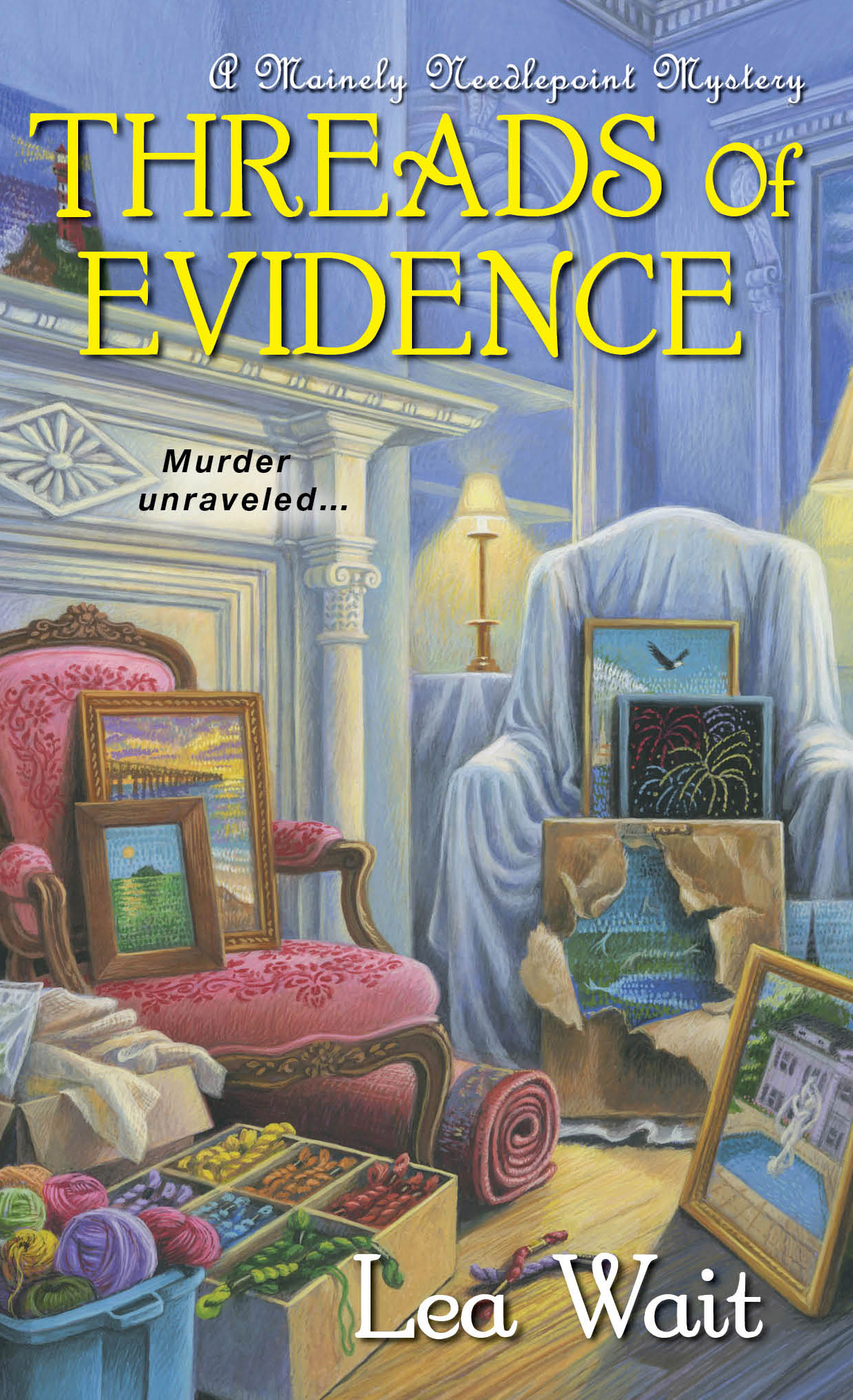
Three of the book’s major characters are boys. (Conventional wisdom says few boys will read a book with a girl as a major character; girls will read books about boys or girls.)Threads of Evidence

I’d also checked the title. UNCERTAIN GLORY is taken from Shakespeare (“the uncertain glory of an April day”) and it had only been used as a title for an early Errol Flynn movie. Although titles can’t be copyrighted … it’s not great to have a dozen books in print with the same one. I also included an annotated list of other books for young people set during this period, and why UNCERTAIN GLORY would be different.

OK. That all sounds good for an historical – especially one for young people. But what about a mystery? How would you do market research for one of those?

Funny you should ask. Because the publisher of my Mainely Needlepoint series wanted competitive analysis/market research done as part of my proposal. (Yes, they also wanted summaries of the first three books in the series and about fifty pages of the first book and the reasons why I would be the best person to write the series.)  I believe my market research tipped the scale in my favor.

I wanted to write a traditional, cozy, mystery series with a little edge. I knew cozies with “craft” backgrounds were popular, so I looked at what was already being published. I wouldn’t have wanted to suggest, say, a series with a background of beading, to a publisher that already had one. Or a series about quilt shops when there were already several being published.

How did I find out who was publishing what, and how successful they were? The answers were simple to find. We’re lucky today to have Amazon and BN.com. Search for “beading mysteries” on those sites and you’ll have a good start on research. In my case I found one other needlepoint series, an embroidery series, a machine embroidery series, and five knitting or crochet series, which I included in my analysis since I suspected they shared some of the same readers.

I then looked to see how many books were in each series; whether the series was still being published; what their publishers were; and whether they were mass market originals, hard cover originals, or trade paper originals.

After reading one or two books in each current successful series it was clear that needlepoint would be a good topic: of the three series featuring embroidery, even the one listed as a Needlecraft Mystery included other forms of stitchery.

But I wanted my series to stand out. All the craft mysteries I’d looked at were set in embroidery/needlecraft/yarn shops, and all but one of the protagonists owned such a shop. I looked at geographic locations, too:  only one series was set in New England.

I decided to set my series in Maine (a plus because many readers know me as a Maine author,) to have my series connected to a custom needlepoint business run by a young woman with a past and by her grandmother … allowing for plots involving people of different ages. And since my earlier series was set in the antiques world, I decided that my Mainely Needlepoint series would build on that, and my needlepointers would also identify and restore antique needlepoint. (More story ideas …)

But how many readers were interested in needlepoint? A little googling told me. Needlepoint is a popular craft, especially among middle-aged and older women … and men. Women over forty are also the largest readers of traditional mysteries. But — I still needed numbers. Publishers want numbers.

The American Needlepoint Guild has 164 chapters, 9500 members, an on-line presence and a bimonthly magazine. The National Needle Arts Association is the professional organization connecting the 873 retail shops and 256 wholesalers of crafts/yarn. Two magazines and several national conventions each year reach needlepointers. Needlepoint is also popular in the UK and in Canada.

Result of that research? A three-book contract, and suggestions of several specific ways to reach readers who might be interested in a needlepoint series. My agent told me he liked the marketing plan so much, if it hadn’t sold to one publisher, he was prepared to market it to other editors. (Note: he didn’t mention the plots of the first three books in the series, or my writing style.)

It took me about two weeks to research and write the proposal for the series. And not only did it help my editor make a decision, it also helped me develop the background for the series, and its characters.

Right now I’m busy promoting TWISTED THREADS, and writing the third in the series. THREADS OF EVIDENCE, the second in the series, will be published in August of this year.

I’m not focusing on writing another series: two is plenty for now! But I do have several other ideas. And, before those ideas get too far along, I’ll be doing some market research. It just makes business sense.


Posted in Lea's Posts, Uncategorized | Tagged , , , , | 3 Comments